The most common thing a school tells us when it starts a robotics program is not "we need kits." It is "our teachers are nervous."
That is a completely reasonable worry. Many of the teachers asked to run a robotics lab are maths, science or computing teachers who have never wired a circuit. Our certification program exists to close that gap — so that a teacher who has never touched a breadboard can walk into a room of 30 students and run a confident session.
Who it is for
The program is designed for teachers and lab coordinators with no electronics background at all. You do not need to know how a motor works, what a resistor does, or how to write a line of Python. If you can follow a build guide and you are willing to get your hands a little untidy, you have everything you need.
Most of our participants are science, computing and maths teachers, plus STEM coordinators who will train others in their school later.
How we teach teachers
Three principles shape every session:
- Teachers build everything themselves. Nobody sits through a slide deck about robots. Participants build the same projects their students will build, in the same order.
- The order is the pedagogy. We follow the same five-stage ladder used in the classroom — from switch-controlled cars, through Bluetooth control, to sensor-driven robots — so teachers feel exactly how a student's confidence grows.
- Teaching is a skill, too. Knowing how to build a robot and knowing how to run a room of 25 students building one are different things. We practise both.
The three blocks
The 18 hours are organised into three six-hour blocks, each with a clear job to do.
Circuits with your hands
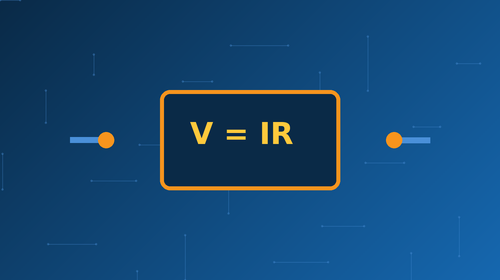
Batteries, switches, LEDs, motors and resistors — the fundamentals, with no code in sight. Participants build the switch-controlled robot car and the arm-equipped version, learn how reversing polarity reverses a motor, and work through Ohm's law with real components rather than a whiteboard.
By the end: every teacher has a working robot and can explain why it works.
Code and control
Introducing the Raspberry Pi Pico and MicroPython. Teachers wire a motor driver, send commands over Bluetooth from a phone, and then read IR sensors so a robot can follow a line. Nobody is expected to arrive knowing Python; we teach only what the projects need.
By the end: teachers have written code that makes a robot react to the world.
Running the classroom
The autonomous obstacle-avoiding robot, then a shift of focus from building to teaching: planning a session, managing kit and time, handling the student who is finished in ten minutes and the one who is stuck at step two, and debugging without simply taking over.
By the end: each teacher has a plan for their first real lesson.
Why we let teachers get it wrong
On purpose, we do not smooth everything out. A wire is left slightly loose. A sensor is mounted at the wrong height. A participant follows the guide and still ends up with a robot that spins in circles.
The reason is simple: the first time a teacher meets a dead motor should not be in front of a class. If they have already been through it themselves — and found the fault — they can stay calm, ask the right question, and let students do the fixing. That habit is worth more than any amount of technical content.
Ask a question before you point at the answer. "What did you expect the robot to do?" turns a stuck student back into an investigator.
After the training
Certification is the start, not the finish. Teachers leave with the build guides and project manuals for each stage, and our training team stays in touch with schools through their first year — because the questions that matter most tend to come up in week three, not on day one.
If you are considering a robotics lab for your school and wondering whether your teachers are ready, they almost certainly are. The program is designed for exactly the teacher who thinks they are not.